How to write an operational plan staff will actually use
An operational plan earns its keep when a casual can pick it up on Thursday and know what happens next. Here is how to write that document, not a binder.
By James Okonkwo, Leadership editor. Published 2024-05-14. Updated 2026-03-22.
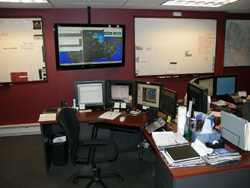

Plenty of Australian workplaces have an operational plan. It lives in a shared drive, written for an assessor or a bank, and nobody on the afternoon shift has opened Final_v7. The old Diploma unit asked you to develop, implement and monitor a plan that allocated resources. That is still the test. If a staff member cannot use the document to run Thursday, it is homework.
This piece is for people who already run the week in their heads. Get that week onto one page so the team can run it when you are in the van. It sits with the rest of our leadership and management guides: useful on Monday, silent on slogans.
What an operational plan is for
An operational plan answers five questions a crew will ask whether or not you write them down.
- What are we trying to finish in this period?
- Who is doing which work, including the backup?
- What money, plant, stock and hours do we actually have?
- What could stop us, including the safety issues?
- How will we know, mid-stream, that we are off?
If your document answers those and still fits on a clipboard, you are ahead of most binders. If it opens with a vision statement and a SWOT, you have written a school assignment. Strategy is whether you take the aged-care contract. The operational plan is how next month's roster makes that choice real.
Start from the week you already run
Do not begin with a template from a course workbook. Begin with last Thursday.
Write the jobs that happened, who did them, the customer promises, and the two moments you swore under your breath. That list is the first draft. Owner-operators find half the week lives in their phone. Acting supervisors find the owner and the leading hand mean different things by "priority".
Then add the constraints you pretend are flexible: award hours, school holidays, the one forklift, the oven that cannot run two functions. A plan that ignores constraints is fiction.
If you are still leading a small Australian team while you write, keep the first version ugly. Ugly and used beats polished and ignored.
One page people will touch, one file people can find
Split the work into two artefacts.
The working plan is one or two pages. It names the period (this month, this quarter, this shutdown), the outcomes, the roster pattern, the customer rules, the live risks, and the three numbers you will look at every Friday. Print it. Put it where the pre-start happens.
The supporting file holds the quotes, the award notes, the supplier list, the maintenance calendar. Staff should not need it to start a shift. You should be able to find it when Fair Work, a customer or an inspector asks how you decided.
Most plans fail because those two get fused into a 22-page PDF. People stop opening it. Then the real plan migrates back into a group chat.
What to put on the working page
Use headings the floor already understands.
- Outcomes this period. Three at most. "Clear the April shutdown with no weekend overtime" is an outcome. "Excel at service" is not.
- Who does what. Names, not roles, plus a deputy for each critical job.
- Hours and money. The hours you can actually roster. The overtime ceiling. The spend that does not need a second signature.
- Customer rules. Cut-off times, refund limits, what "urgent" means.
- Risks. The ones that can stop the week or hurt someone. Link the safety ones to your work health and safety duties, not to a slogan about looking out for mates.
- Checkpoints. When you will look, and what "off track" means in a number.
A table beats a paragraph
Staff will not parse a block of prose at 5.45 am. Give them a table they can argue with.
| Plan that dies in the drive | Plan staff will use |
|---|---|
| Increase utilisation by 12 per cent | Two extra metro runs on Tue and Thu. Dan drives. Spare driver is Mei. |
| Monitor KPIs weekly | Friday 2 pm: jobs completed, overtime hours, two customer complaints. |
| Maintain a safety culture | Wet dock mats on before first truck. Pre-start if rain. No lone close. |
| Align stakeholders | Customer cut-off is 11 am. After that it is next day, including for the owner. |
| Resource flexibly | Overtime only with Priya's okay. Ceiling is six hours a week across the team. |
| Continuous improvement | Snag board. We pick two fixes on the last Friday of the month. |
If a line cannot be written in the right-hand style, it is not ready for the working page. Put it in the supporting file or delete it.
Resource the plan like an adult
The old unit spent time on resources because that is where plans die. You cannot "increase same-day deliveries" with one van and a driver who finishes at 3 pm. Write the ugly arithmetic.
Hours first: work, award breaks, then the 15 per cent that sickness eats. If the number is bigger than the roster, change the promise or buy the hours. Name the single points of failure — the only isolator, the only oven — and put a backup in the plan or admit there is not one. If recruiting and retaining frontline staff is already hard, do not assume a fully staffed fortnight. Write the minimum crew that still lets you open safely.
Implementation is a conversation, not a launch
Do not email the plan on Sunday night and call that implementation. Walk it.
Stand with the people who will use it. Ask which line is wrong. You will hear that the 11 am cut-off is already ignored for one builder, or that the spare driver is on light duties. Fix those lines in front of them. For safety risks that is also a legal habit, not a nicety.
Run one week against the page. When reality disagrees, change the page. If the disagreement is a person's standard, take it to a performance conversation that keeps trust. If you also manage customer service while running operations, put your own name under the cut-off. The team is watching.
Monitor without building a dashboard nobody opens
You need three numbers, looked at on a standing day. Not twelve.
Choose numbers the team can influence this month. Completed jobs against promised jobs. Overtime hours. Make-goods. Pick three. Write the threshold: "If overtime crosses six hours, we drop Saturday trade work."
Look at the numbers with the people who made them. A spreadsheet you review alone is a hobby. When the numbers say the plan is wrong, change the plan. When they say a person is not following a plan they helped write, that is a different conversation. When they say people are exhausted, you may need emotional intelligence at work more than another column.
Worked example: a month in an Elizabeth workshop
Carla runs a six-bay workshop in Elizabeth with four trades, one apprentice and a front-of-house casual. The accountant had a quarterly "ops plan". The floor had a whiteboard that got wiped at lunch. For June she put one page above the kettle.
Outcomes. Clear the logjam of waiting Japanese imports. No Saturday overtime unless a safety job. Keep the courtesy-car promise to half a day.
Who. Bays 1–2: Tom and the apprentice on the imports. Bays 3–4: Sam and Priya on same-day services. Front: Jess until 3, Carla after that. Deputy for diagnosis: Sam. Deputy for the card machine: the apprentice, who has actually been shown.
Hours and money. 172 productive hours if nobody is sick. Overtime ceiling $900. Parts over $400 need Carla's okay, including when she is under a hoist.
Customer rules. Booked services only after 3 pm if they arrived after 10. No "we'll squeeze you in" from anyone, including Carla's brother-in-law.
Risks. Two-post hoist service due 12 June — book it or lose the bay. Solvent storage is a mess after the apprentice's last tidy. No lone lock-up. If a customer is aggressive at the counter, Jess does not handle it alone.
Checkpoints. Friday 3 pm: jobs carried, overtime, two complaints. If carried jobs exceed eight, drop Thursday's "squeezes" next week.
Week two, a regular arrived at 11.20 and Carla nearly broke her own rule. Jess pointed at the page. Carla kept the rule and offered Friday. That is an operational plan working. It changed a decision in the moment, which no 22-page PDF has ever done.
When the plan should change
Change it when the roster, a key person, a customer promise or a near miss makes last month's page untrue. Do not change it because you had a bad Tuesday. Date the page. "We changed it in our heads" is a weak sentence if an insurer later asks.
If you want a second pair of eyes on a draft, contact the editorial desk. Send the one-page version, not the binder. We will tell you which lines a casual could not use.
Frequently asked questions
How long should an operational plan be?
If staff will use it weekly, keep the working version to one or two pages. A longer annual document can sit behind it, but the page people touch must fit on a clipboard or a phone screen.
Who should write the plan?
The person who runs the week writes the first draft. The owner or manager sets the targets and the limits. Staff who do the work then mark what is wrong before you laminate anything.
How often should we update it?
Review the numbers monthly and the methods whenever a roster, supplier or customer promise changes. A plan that still describes last summer's hours is already a hazard.
Keep reading in this hub
Managing customer service when you also run operations
10 February 2025
When you own the roster and the customer promise, service is an operations problem. Write the rules the floor can use while you are under a hoist.
Read the managing customer service when you also run operations guide
Recruiting and retaining frontline staff in a tight labour market
18 November 2024
Frontline hiring in Australia is no longer a poster and a hope. Write the real job, pay the real rate, and stop losing people in the first six weeks.
Read the recruiting and retaining frontline staff in a tight labour market guide

Emotional intelligence at work, without the fluff
9 September 2024
Emotional intelligence is useful when it changes what you do in the next conversation. It is not a personality type, a poster, or a reason to avoid a hard standard.
Read the emotional intelligence at work, without the fluff guide