WHS consultation that workers will actually trust
The model WHS Act requires consultation when you identify hazards and change the work. This is how to do it so people still speak up after the meeting ends.
By Clare Dunstan, WHS editor. Published 2024-10-07. Updated 2026-07-14.
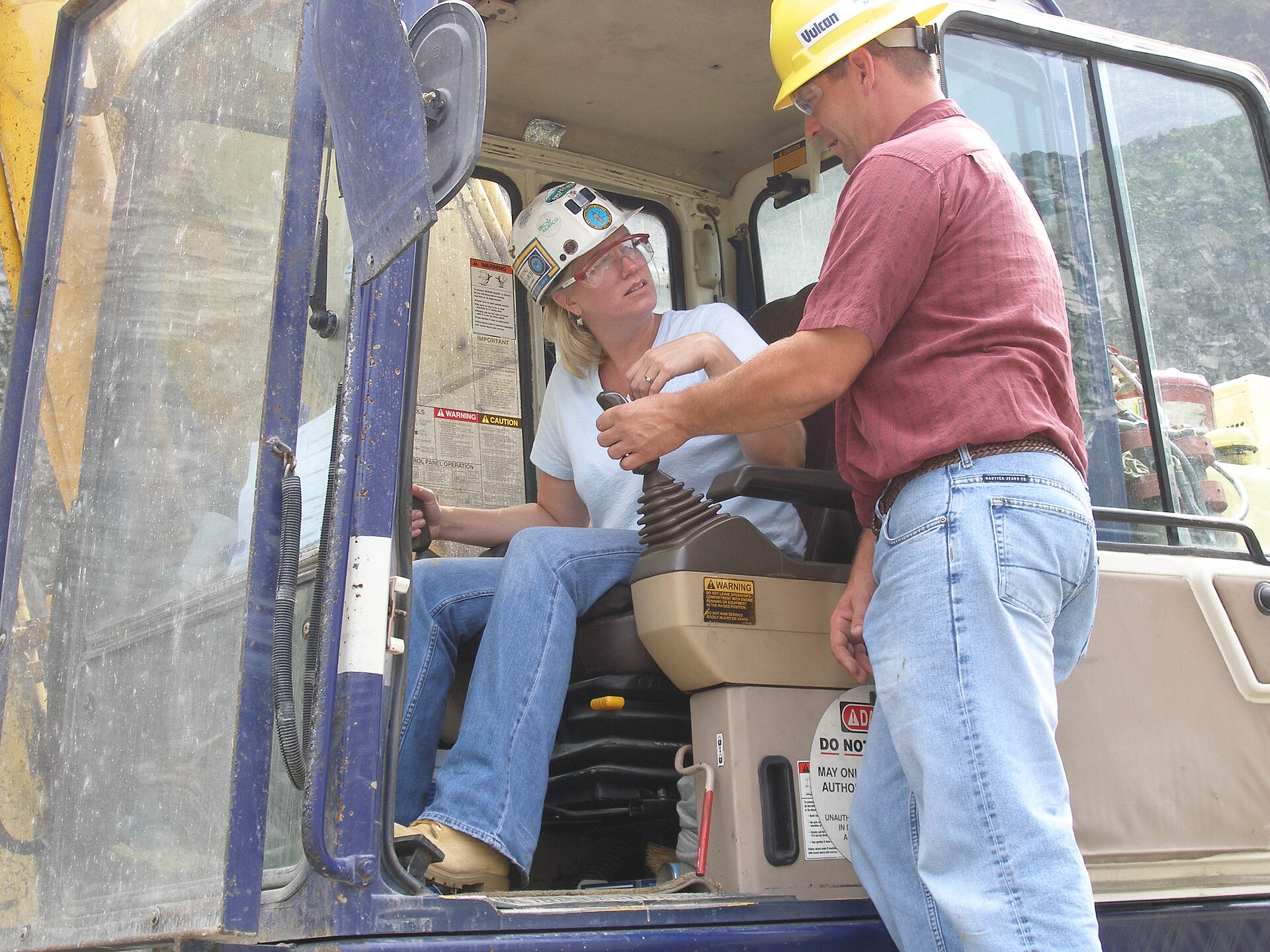

The photograph that accompanies this piece is the whole method: a supervisor in a hard hat talking with the person on the plant, on the job, before the work starts. That conversation is what the model Work Health and Safety Act means by consultation. A quarterly committee that reads the incident statistics aloud is a meeting. It may be a useful meeting. It is not the duty.
A PCBU must consult workers who are, or are likely to be, directly affected by a health and safety matter. If those workers have a health and safety representative, the PCBU must consult the HSR. Victoria still uses the OHS Act 2004 and WorkSafe Victoria's language, but the practical test is the same. Did the people who do the work get a real say before you changed the work?
This guide sits in the workplace health and safety hub. It is general information, not a script for your workplace. If a duty here is wrong for your jurisdiction, tell us via contact. We handle corrections under the editorial standards.
The duty is triggered by decisions, not by the calendar
The model Act lists the moments. You consult when identifying hazards and assessing risks, when deciding how to control them, when deciding on workplace facilities, when proposing changes that may affect health and safety, and when deciding on the procedures for consultation, resolving issues and monitoring. Those moments happen on a Tuesday afternoon when someone cuts a void, changes a roster, brings in a labour-hire crew, or moves the dishwasher.
A scheduled committee can catch some of those moments if it is fast enough. Most of them will be missed if the only consultation channel is a monthly agenda. The live channel is the supervisor who can stop at the excavator, the nurse unit manager who can change tonight's allocation, the chef who can look at the pass before Saturday, the warehouse leading hand who can walk the aisle with the afternoon pickers.
Issue resolution sits next to consultation. If workers raise a serious risk and you cannot agree, the Act provides a process, and HSRs have a power to direct that unsafe work cease in the circumstances the Act sets. Treating every concern as a complaint to be managed is how you end up with a cease-work direction you did not see coming.
What 'consult' means in the section, not in the brochure
Share relevant information. Give workers a reasonable opportunity to express their views and to contribute to the decision. Take those views into account. Advise workers of the outcome in a timely way. If HSRs are in place, involve them.
Relevant information is the drawing, the new chemical, the changed pick-rate, the resident's behaviour-support plan, the fact that the afternoon labour-hire intake has not done your site induction. It is not a 40-page pack emailed at 4.55 p.m. for a 7 a.m. start.
A reasonable opportunity is time and a setting where a person can speak. A junior on a construction frame will not contradict a leading hand in front of the principal contractor unless you have already shown that contradiction is safe. An agency nurse will not describe a violent resident if the last person who did so lost shifts. A kitchen hand whose English is not the language of the meeting needs another way in.
Taking views into account is the part organisations fake. You do not have to do what every worker asks. You do have to be able to say what you heard, what you decided, and why. "We noted your feedback" is not a decision. "We will not put a second person on the close because it costs money, and we have not looked at changing the banking time" is an honest decision — and a weak one under reasonably practicable.
Structures that help, and structures that become theatre
Health and safety representatives are the Act's main structure. Workers can ask for an election. The PCBU facilitates it and gives HSRs the training, time and information the Act requires. HSRs can inspect, accompany an inspector and, in the circumstances the Act allows, issue a provisional improvement notice or direct that unsafe work cease.
Committees are useful when worker members still do the work and actions survive the meeting. They become theatre when every worker member is a supervisor and the only paper is last month's lost-time graph. Write how a casual or labour-hire picker raises an issue at 2 a.m., then use that procedure when it is inconvenient.
Victoria's OHS Act 2004 has its own HSR and committee rules. Use WorkSafe Victoria's election materials on a Geelong site. Do not run a model-WHS pack because the national folder is neater.
Talk to the people who are actually exposed
Consultation that only includes direct employees is incomplete on most Australian sites. Labour-hire pickers in a Kewdale cold store, agency carers on a Tasmanian night shift, subcontract carpenters on a Mandurah frame, and contract cleaners in a city office are workers the PCBU must consult if they are affected. Hosts and labour-hire firms are overlapping PCBUs. They have to consult each other as well as their own people.
Working-from-home staff are easy to forget because they are not in the room. They are still workers. The companion piece is working from home WHS obligations. A Teams session can be consultation if people can speak and the decision is still open. A recorded briefing they watch on mute is not.
Psychosocial hazards die in unsafe rooms. If the hazard is the supervisor, the supervisor cannot be the only channel. Psychosocial hazards at work covers the content. Consultation is the sensor. Offer a path that does not run through the person named in the concern.
What trust looks like on the floor
Trust is not a survey score. It is whether the next near miss is written down. It is whether a young carpenter will say the void cover is being used as a platform. It is whether an aged-care night carer will say they are doing two-person care alone. It is whether a cook will say the pass cannot be kept dry at 9 p.m.
You build that in small, boring ways. Close the loop after incidents. Put the person's name on the action from the risk assessment. Do not punish the messenger. Apply the fatigue rule to the leading hand. Walk the job after you promised to. If you cannot do the thing they asked, say so this week, not after the next committee.
The supervisor in the photograph is doing something many systems forget: asking the operator about the operator's work. That is also how you catch high-risk method drift before it becomes a notifiable incident. High-risk work and supervisor duties depends on that conversation. A safe work method statement that nobody on the plant will own is a consultation failure dressed as paperwork.
A map of consultation that is still a conversation
| Moment | Who must be in it | What good looks like | What fake looks like |
|---|---|---|---|
| Identifying a hazard | The people who do the task, plus the HSR for that group | Walking the ensuite, the dock, the pass or the void together | A register updated in the office |
| Choosing a control | Same people, and any other PCBU who shares the risk | "We tried the hoist; the ensuite is too small; here is the other bathroom" | "PPE and training" issued by email |
| Changing the work | Everyone newly exposed, including labour hire and home workers | The new roster or plant arrives after the conversation | A memo on the day of the change |
| After an incident | Injured person if they can, witnesses, HSR | "Here is what we changed" | A blame finding and a retraining invoice |
Officers, supervisors and the minutes that matter
Officers exercising due diligence should see consultation where the risk is, not only that a committee exists. A pack of attendance sheets is not verification. A sample of decisions that changed after a worker spoke up is.
Supervisors carry the live duty. Train them for that conversation the way you would train them for a permit. If they have to ring three people to move a pallet out of a walkway, you have resourced a performance, not consultation. A reasonable procedure is one a carpenter can use with wet hands — not a portal that needs a desk login.
Write minutes a person who was not there can use: the decision, the views you rejected, the action, the name, the date. If an inspector and a sceptical worker cannot see the same story, you held a meeting and hoped the Act would not notice.
Frequently asked questions
When must a PCBU consult workers?
When identifying hazards and assessing risks, deciding how to eliminate or minimise those risks, deciding on welfare facilities, proposing changes that may affect health and safety, and deciding on procedures for consultation, issue resolution and monitoring. The model WHS Act sets that list out. Victoria has a comparable consultation duty under the OHS Act 2004.
Do we have to have a health and safety representative?
Workers can request an HSR election. If they do, the PCBU has to facilitate it. You can consult without an HSR, but once HSRs are in place they have powers and you have to consult them on the work they represent. A committee is useful. It does not replace HSRs or the duty to talk to the people who do the job.
Is a signed toolbox attendance sheet consultation?
Not on its own. Consultation means sharing relevant information, giving workers a reasonable chance to express views, and taking those views into account before you decide. A monologue next to an excavator with a clipboard for names is a briefing. It becomes consultation when the operator can change the plan.
Keep reading in this hub
High-risk work and what supervisors need to know
4 March 2025
Licences, safe work method statements and the live duties of the person who can actually stop the job — on construction sites, in warehouses and anywhere plant and gravity share the work.
Read the high-risk work and what supervisors need to know guide
Working from home: WHS obligations that still apply
20 January 2025
A home office is still a workplace under the model WHS Act. This guide covers what a PCBU can reasonably do when the work is in a spare room, a kitchen table or a regional rental.
Read the working from home: whs obligations that still apply guide
Incident reporting and investigation that actually improves safety
19 August 2024
How to get incidents and near misses onto the record, notify the regulator when the law requires it, and investigate systems instead of hunting for a careless worker.
Read the incident reporting and investigation that actually improves safety guide